Lost in the Woods and Found by the Neckar: Heidelberg’s Wild Heart
You know that feeling when you think you’ve seen all a city has to offer, but then it quietly pulls you into its hidden green embrace? I stumbled upon Heidelberg’s secret side—away from the castle crowds, deeper than the old town alleys. Think misty forest trails, sun-dappled riverbanks, and silence so rich it hums. This isn’t just a fairy-tale town; it’s a gateway to untouched natural beauty. Let me take you where the maps don’t. Beyond the postcard-perfect façades lies a quieter rhythm, one shaped by ancient trees, winding paths, and the gentle flow of the Neckar River. For those willing to wander just a little farther, Heidelberg reveals a wild heart beating beneath its polished surface.
Beyond the Postcard: Discovering Heidelberg’s Untamed Side
Heidelberg is often celebrated for its romantic silhouette—its red-tiled rooftops, the ivy-clad ruins of the castle perched above the river, and the graceful arc of the Alte Brücke. These landmarks are undeniably beautiful, and for good reason. Yet, they represent only one layer of the city’s soul. For every tourist pausing for a photograph on the Philosophenweg, there are countless others who never step beyond the paved promenades. What they miss is something more profound: the soft hush of a forest floor underfoot, the sudden glimpse of a kingfisher darting across the Neckar, or the way morning mist curls like smoke around the hills before the sun burns it away.
The true magic of Heidelberg unfolds not in its curated views, but in the spaces between them. Just a short climb from the city center, the urban hum fades, replaced by the rustle of leaves and the distant call of a woodpecker. The Neckar Valley, carved over millennia, opens into a landscape where nature reclaims its dominance. Here, the air feels different—cleaner, cooler, alive with the scent of damp earth and pine. It’s a place where time slows, not by design, but by instinct. Visitors who venture beyond the postcard sights discover that Heidelberg is not merely a destination to be seen, but a landscape to be felt.
This shift from sightseeing to sensory immersion is subtle but powerful. Instead of collecting images for a photo album, one begins to collect sensations: the warmth of sun on stone after a rain, the cool shadow of an oak canopy, the crunch of gravel on a forgotten path. These moments don’t announce themselves. They arrive quietly, like a whisper in a language you’ve always understood but rarely hear. To experience them, all one needs is the willingness to step off the main trail and let the city’s wilder side guide the way.
The Philosopher’s Whisper: A Deeper Walk Through the Woods
The Philosophenweg, or “Philosopher’s Path,” is one of Heidelberg’s most famous walking routes, named for the 19th-century thinkers who once strolled its length, lost in contemplation. Today, it remains a popular destination, offering panoramic views of the old town and the river below. But just beyond the well-trodden stone path, where the paved trail ends and the dirt begins, another world opens. This is where the true spirit of the Philosophenweg lives—not in the crowded overlooks, but in the quiet extensions that wind deeper into the forest.
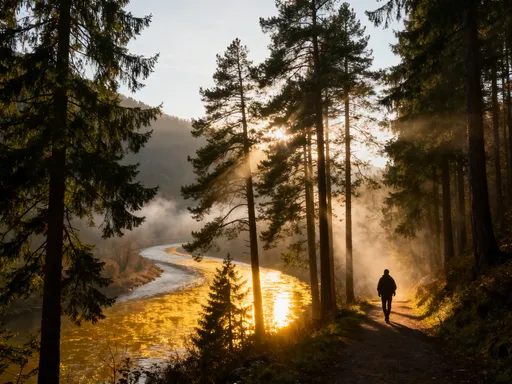
These upper trails, less marked and rarely mentioned in guidebooks, climb gently into the wooded slopes of the Heiligenberg. Here, the canopy thickens, filtering sunlight into shifting mosaics on the forest floor. The air carries the crisp, resinous scent of pine, mingled with the faint sweetness of wild garlic in spring. Birdsong replaces conversation; the only footprints in the soft earth belong to deer or fox. Every few hundred meters, a sudden clearing appears—unexpected vantage points where the Neckar curves like a silver ribbon through the valley, and the city looks small, almost fragile, nestled among the hills.
Walking these paths is less about reaching a destination than about entering a state of mind. The rhythm of footsteps on packed earth, the steady rise of the incline, the occasional pause to catch a breath—all of it conspires to quiet the mental chatter. This is mindfulness in motion, a form of moving meditation that requires no special training, only presence. The forest does not demand attention; it invites it. And in return, it offers clarity. Many who walk these trails speak of a subtle shift—a lightness in the chest, a sense of having left something behind without knowing what it was. It’s no wonder the philosophers once came here. The woods don’t offer answers, but they make the questions feel lighter.
River Secrets: Following the Neckar Off the Beaten Path
The Neckar River is the lifeblood of Heidelberg, flowing with quiet dignity beneath the bridges and beside the promenades. Yet, most visitors experience it from a distance—admiring it from the Old Bridge, cruising it on a tourist boat, or sipping wine at a waterside café. Few follow its course into the quieter stretches where the river reveals its more intimate character. Downstream from the city center, where the buildings thin and the trees close in, the Neckar becomes something else: wilder, slower, more secretive.
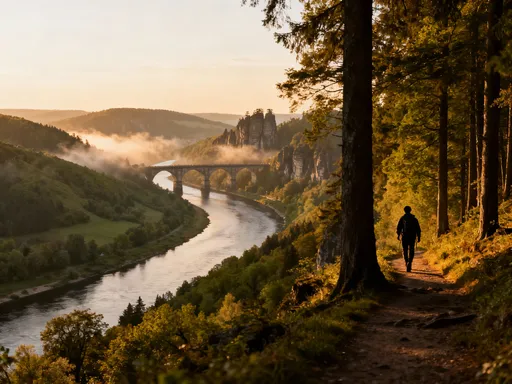
A riverside hike in this direction unfolds like a slow revelation. The first clue is the change in sound—the clatter of trams and chatter of pedestrians gives way to the soft lap of water against stone, the rustle of reeds in the breeze. Hidden footpaths appear, some marked, others worn by use, leading down to the water’s edge. Here, the riverbanks are uneven, studded with moss-covered boulders and half-buried tree roots. Abandoned stone steps, remnants of forgotten access points, descend into the shallows, their purpose lost to time.
Further on, quiet meadows open beside the water, shaded by willows and alders. These are the places where locals come to escape—the young couple reading under a tree, the fisherman with a bamboo rod, the dog splashing through the shallows. In spring, the banks burst with color: purple loosestrife, yellow flag iris, and delicate white blooms of water crowfoot. By summer, the water reflects the sky so perfectly it’s hard to tell where one ends and the other begins. Autumn brings a different beauty—mist rising in the early hours, the trees aflame with red and gold, the river moving like liquid amber.
To follow the Neckar is to learn its rhythms. It doesn’t rush; it meanders. It doesn’t shout; it murmurs. And in doing so, it teaches patience. There’s no need to hurry. The river will keep flowing, the light will keep changing, and if you stay long enough, you might just hear it—not with your ears, but with something deeper.
The Forest Beyond the Castle: Exploring Königstuhl’s Green Mantle
Königstuhl, the “King’s Seat,” is Heidelberg’s most prominent hill, crowned by a funicular railway that carries thousands of visitors each year to its summit. From the top, the view is magnificent—rolling hills, patchwork fields, and the winding Neckar far below. But while many ride up and back down without stepping far from the station, the true wonder lies in the forested slopes that surround the peak. These are not manicured parks or city trails, but a living, breathing woodland that feels centuries old.
A network of well-maintained but rarely crowded trails winds through beech and fir trees, their trunks straight and tall, their roots gripping the rocky soil. As you climb higher, the air grows cooler, the light dimmer. Ferns unfurl in the shade, and mushrooms sprout after rain—chanterelles in late summer, boletes in autumn. Birdlife thrives here: the melodic call of the blackcap, the sharp cry of a sparrowhawk, the soft coo of a wood pigeon. Occasionally, if you’re quiet enough, you might spot a roe deer slipping between the trees or a red squirrel darting up a trunk.
What makes Königstuhl remarkable is not just its beauty, but its accessibility. Within minutes of leaving the city, you can be deep in the woods, surrounded by a silence so complete it feels sacred. This proximity of wilderness to urban life is rare, and it’s something Heidelberg cherishes. The forest is not a distant escape; it’s a daily companion. Locals jog these trails, families picnic in clearings, and students from the university come to study beneath the trees. The forest is not preserved behind glass—it’s lived in, loved, and respected.
For the visitor, this means an extraordinary opportunity: to experience true forest immersion without leaving the city limits. You don’t need special gear or a full day. Just sturdy shoes and a willingness to walk. And as you follow the trails upward, emerging now and then onto open ridges with sweeping views, you begin to understand why this place has been revered for generations. It’s not just the view from the top—it’s the feeling of being part of something ancient and enduring.
Hidden Vistas: Sunrise at the Unmarked Clearing
One of Heidelberg’s best-kept secrets is an unmarked clearing on the western edge of the city, reachable after a 20-minute walk through a quiet forest path. There are no signs, no railings, no crowds. Just a narrow trail that forks left after a small wooden footbridge, then climbs steadily through beech trees until, suddenly, the trees part and the world opens below.
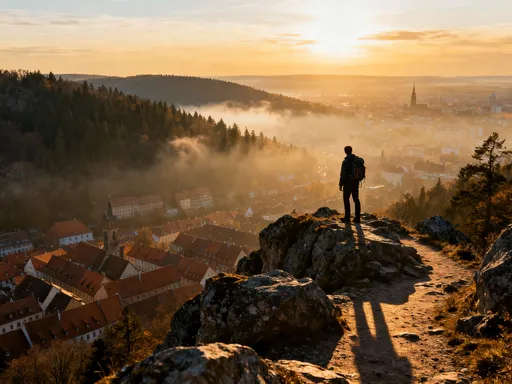
At sunrise, this spot is nothing short of magical. The first light spills over the eastern hills, gilding the treetops and setting the Neckar ablaze with gold. From this vantage, the river curves in a perfect arc, reflecting the sky like polished glass. The old town appears miniature, its rooftops glowing softly, the castle a silhouette against the dawn. Mist rises from the water, curling like breath in the cool air. There is no sound but the wind and the distant call of a heron. In that moment, the world feels both vast and intimate—a private revelation shared only with the sky.
Reaching this place requires a bit of intention. It’s not on most maps, and GPS signals can be unreliable under the thick canopy. But that’s part of its charm. There’s a thrill in navigating by instinct, in trusting the path even when it seems to disappear. It’s a reminder that discovery isn’t always about finding something new, but about seeing something familiar in a new way.
For those who make the journey, a few simple tips enhance the experience. Start early—well before sunrise—to arrive in darkness and watch the world wake. Wear waterproof hiking shoes; the path can be damp, especially in spring. Bring a light jacket; the forest is cool in the morning, even in summer. And carry a thermos of tea or coffee—not for convenience, but for ritual. To sit in silence, sipping warmth as the light spreads, is to participate in a quiet ceremony older than cities.
Why Nature Wins: The Emotional and Physical Benefits of Off-Trail Exploration
There is growing recognition, supported by scientific research, that time spent in natural environments has measurable benefits for both mental and physical health. While Heidelberg’s forests and rivers were not designed as therapy, they serve that purpose for countless visitors and residents alike. The simple act of walking through a quiet woodland, listening to birdsong, or watching sunlight dance on water can reduce stress hormones, lower blood pressure, and improve mood. These effects are not fleeting; studies suggest that even short exposures to green spaces can have lasting positive impacts on emotional well-being.
The concept of “forest bathing,” or shinrin-yoku, which originated in Japan, captures this idea: that being present in a forest is not just a physical activity, but a sensory and emotional practice. It’s not about distance covered or peaks conquered, but about immersion. The scent of trees, the texture of bark, the sound of wind—these inputs engage the nervous system in a way that urban environments rarely do. In Heidelberg, this experience is not reserved for weekend getaways or distant national parks. It’s available daily, just a short walk from the city center.
Moreover, off-trail exploration fosters a deeper connection to place. When you navigate without a map, when you pause to notice a bird or follow a deer trail, you become more attuned to your surroundings. This mindfulness counters the mental fatigue caused by constant stimulation—notifications, traffic, schedules. Nature, in its quiet constancy, offers a reset. It doesn’t demand your attention; it earns it. And in doing so, it restores a sense of balance that modern life often erodes.
For families, these experiences are especially valuable. Children who grow up exploring forests develop stronger spatial awareness, creativity, and resilience. Adults who walk these paths often speak of feeling “recharged,” as if the woods have given back something the city took. In Heidelberg, nature is not an ornament—it’s a vital part of the city’s soul, a silent partner in the well-being of those who live and visit here.
How to Find Your Own Secret Spot: A Gentle Guide to Mindful Wandering
The most rewarding journeys are often the ones without a fixed destination. In Heidelberg, the goal is not to check off landmarks, but to cultivate curiosity. Start simple: wear comfortable, sturdy shoes. Begin your walk early in the morning, when the city is still waking and the trails are quiet. Carry water, a light snack, and a small notebook if you like to jot down thoughts. But leave the phone in your pocket. Not to ignore the world, but to be more fully in it.
As you walk, pay attention to small signs: a deer trail veering off the main path, a patch of wildflowers, the sudden coolness under a tree canopy. Follow them, not because they lead anywhere in particular, but because they invite exploration. Listen more than you look. The forest speaks in rustles, calls, and silences. Let it guide you.
Respect is essential. Stay on marked trails where required, avoid disturbing wildlife, and carry out everything you bring in. This is not conquest; it’s communion. The forest does not belong to us—we belong to it, even if only for a morning.
And when you find your own quiet corner—a sunlit glade, a riverside bench, an unmarked overlook—sit for a while. Breathe. Let the stillness settle into your bones. You may not discover a new landmark, but you might rediscover something within yourself. Because Heidelberg’s true magic isn’t in its stones or spires, but in the whispering trees, the quiet bends of the river, and the wild heart that beats just beyond the map.