You Won’t Believe What I Found Wandering Skopje’s Festival Streets
Wandering through Skopje, I stumbled upon something magical—festivals bursting with life in every corner. It wasn’t on any tourist map, but the rhythm of drums, colors in the air, and locals dancing in the streets pulled me in. North Macedonia’s capital isn’t just statues and history; it’s alive with cultural energy. If you think festivals are just crowds and noise, think again—this is where tradition breathes, connects, and surprises. In a city often overlooked by mainstream travelers, the real magic happens when you let go of itineraries and allow yourself to be drawn into spontaneous celebrations. These are not staged performances for cameras, but living expressions of community, identity, and joy that unfold in squares, along riverbanks, and in hidden courtyards. This is the soul of Skopje, revealed not through guidebooks, but through presence, patience, and an open heart.
First Encounters: Getting Lost in Skopje’s Pulse
Skopje does not announce itself with grand fanfare. For many first-time visitors, the city appears reserved, even muted—wide boulevards lined with pastel-toned buildings, the occasional monumental statue looming in the distance, and a skyline shaped as much by history as by reconstruction after the 1963 earthquake. There’s a stillness in the mornings, a sense of routine rather than revelry. It’s easy to mistake this calm for lack of character. But beneath the surface, a different rhythm pulses—one that only reveals itself to those willing to wander without a fixed destination.
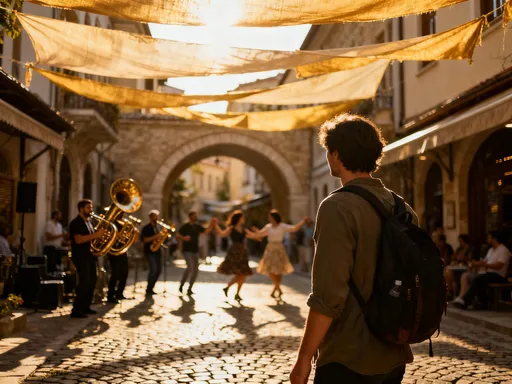
I remember turning down a narrow side street near the Old Bazaar, lured by the faint echo of brass instruments. What began as a quiet walk soon transformed into an unexpected celebration. A small crowd had gathered around a group of musicians in traditional woolen vests, playing fast-paced tunes on clarinets and drums. Children clapped in time, elders swayed gently, and strangers were pulled into a circle dance with nothing more than a smile and an outstretched hand. There were no signs marking this as an event, no ticket booths or schedules—just music, movement, and shared delight.
This moment crystallized a truth about travel: some of the most meaningful experiences occur when we surrender control. The beauty of Skopje lies not only in its landmarks but in its unscripted moments. Unlike more tourist-saturated cities where culture is packaged and performed, Skopje’s festivals often emerge organically, rooted in local life rather than commercial appeal. To witness them is to be invited—not as a spectator, but as a participant in something genuine and fleeting.
For women in their thirties to fifties, many of whom travel with a desire for connection and authenticity, these spontaneous gatherings offer a rare kind of fulfillment. They are not about ticking off attractions, but about feeling part of a living culture. The initial impression of Skopje as quiet or unassuming quickly gives way to a deeper understanding: this is a city that reveals itself slowly, generously, to those who take the time to listen.
The Heartbeat of Festival Culture: More Than Just Celebration
Festivals in Skopje are not merely events—they are vital expressions of identity, shaped by centuries of layered history. As a crossroads of empires, North Macedonia carries influences from the Ottoman era, Slavic traditions, Byzantine heritage, and Balkan resilience. These elements converge in its public celebrations, where music, food, dance, and ritual become threads in a rich cultural tapestry. What makes Skopje’s festival culture especially powerful is its role as a social anchor—binding generations, preserving customs, and reinforcing community bonds.
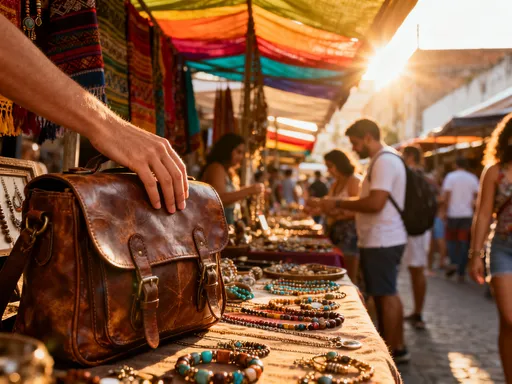
One of the most prominent annual events is the Skopje Summer Festival, a month-long program that transforms the city into an open-air stage. While some performances are ticketed and professionally produced, many activities spill into public spaces: open-air concerts along the Vardar River, folk ensembles dancing in pedestrian zones, and artisans selling handmade goods under shaded tents. Equally significant are religious and seasonal observances, such as the Ilinden celebrations in early August, which honor historical uprisings and spiritual renewal. These occasions draw families together, with elders sharing stories, children dressed in embroidered folk costumes, and communal meals served on long tables.
What stands out is the absence of performative distance. Unlike festivals designed primarily for tourists, where culture is displayed behind invisible barriers, Skopje’s gatherings invite inclusion. A visitor who lingers, smiles, and shows respect is often welcomed into the circle—sometimes literally. The food alone tells a story: golden burek fresh from the oven, ajvar simmered slowly over wood fires, and sweet tulumba desserts drizzled with syrup. Each dish carries memory, passed down through generations, often prepared by women who view cooking as both art and duty.
Music, too, serves as a bridge between past and present. The sound of the gaida, a Balkan bagpipe with a haunting, reedy tone, echoes through cobbled alleys during festivals. Accompanying it are šestorka rhythms—six-beat patterns that drive traditional line dances known as oro. These dances are not choreographed performances but communal acts of unity, where age and background dissolve in shared movement. For a traveler seeking emotional resonance, there is profound comfort in joining hands with strangers and moving to a rhythm older than memory.
Wandering with Purpose: How Slow Exploration Reveals Hidden Layers
In an age of optimized itineraries and curated travel experiences, the idea of wandering may seem inefficient, even irresponsible. Yet in Skopje, as in many lesser-known capitals, the most rewarding discoveries come not from checklists, but from stillness and observation. Purposeful wandering—a blend of curiosity, patience, and presence—allows travelers to access layers of culture that remain invisible to hurried sightseers.
Consider the small plaza near the Kale Fortress, where elderly men gather daily to play tavla, the Balkan version of backgammon. To the passing tourist, it might appear as nothing more than a quiet corner of the city. But sit for a while, accept a cup of strong Turkish coffee offered with quiet hospitality, and the scene transforms. Laughter rises as dice clatter across wooden boards. A local musician arrives with an accordion. Within minutes, the plaza becomes a spontaneous stage. Children join in, neighbors step out of nearby shops, and soon, a dance forms organically.
This is the essence of cultural immersion: not in grand gestures, but in moments of shared humanity. For women who often navigate life with careful planning and responsibility, such experiences offer a rare sense of freedom. There is no need to perform, to understand every word, or to master the steps. Simply being there—with an open heart and a willingness to engage—is enough.
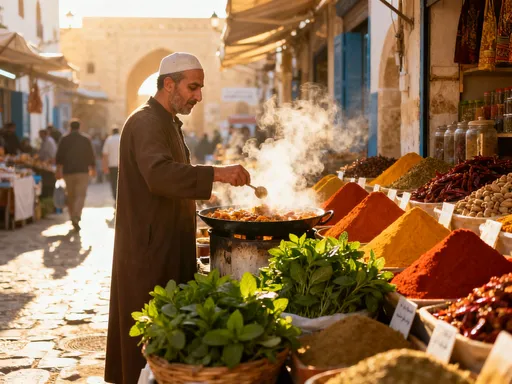
Timing plays a crucial role. Late afternoon, when the summer heat softens and golden light bathes the city, is often when life spills into the streets. Weekends, especially in June, July, and September, increase the likelihood of encountering festivals or local gatherings. But even outside official events, the rhythm of Skopje’s daily life offers its own kind of celebration: women selling herbs at open markets, families strolling along the river promenade, and impromptu music in hidden courtyards. The key is to move slowly, to linger over coffee, to smile at passersby, and to allow the city to reveal itself in its own time.
Festival Sounds and Sights: A Sensory Journey
To walk through a festival in Skopje is to be immersed in a sensory symphony. The air carries the rich, smoky aroma of grilled meats and roasted peppers, mingling with the sweetness of freshly baked pastries. The scent of ajvar—a slow-cooked blend of red peppers, eggplant, and garlic—drifts from open windows and street vendors, evoking kitchens filled with generations of women preserving seasonal harvests. Every smell tells a story of home, of care, of continuity.
The soundscape is equally vivid. The piercing cry of the zurna, a double-reed wind instrument, cuts through the air during lively dances. It is often accompanied by the deep pulse of the tapan, a large double-headed drum played with a curved stick and hand. Together, they create a rhythm that is both exhilarating and grounding. In quieter moments, the melancholic strains of a violin or the drone of the gaida linger in the background, reminding listeners of mountains, villages, and centuries of storytelling.
Visually, the festivals are a celebration of color and craftsmanship. Women in traditional dress wear intricately embroidered vests and aprons, each stitch representing regional identity. Red, black, gold, and deep blue dominate the patterns, with motifs passed down through families. Even today, some grandmothers still teach their granddaughters how to embroider these designs, ensuring that the art does not fade. Jewelry made of silver and coral, often handed down as heirlooms, catches the sunlight as dancers move in synchronized lines.
What makes these experiences even more powerful is how they transform ordinary spaces. A parking lot near the Stone Bridge becomes a dance floor at dusk. A riverside park hosts a children’s puppet show in the afternoon. Even the city’s modern sculptures and neoclassical buildings—part of Skopje’s controversial “antiquization” project—serve as unexpected backdrops for traditional music. There is a quiet defiance in this: no matter how much the cityscape changes, the culture persists, adapting without losing its essence. These festivals are not just celebrations—they are acts of preservation, pride, and quiet resistance.
When Tradition Meets the Street: Urban Spaces Come Alive
Skopje’s physical landscape plays a unique role in shaping its festival culture. The city’s wide boulevards, monumental architecture, and the winding Vardar River create a dramatic canvas for public life. Unlike compact old towns where festivals are confined to narrow alleys, Skopje’s open spaces allow celebrations to expand, evolve, and involve large numbers of people. The riverfront promenade, lined with sculptures and cafes, becomes a natural gathering place during summer evenings, when music fills the air and families stroll hand in hand.
The Stone Bridge, a 15th-century Ottoman structure connecting the old and new parts of the city, is more than a historical landmark—it is a living artery of cultural exchange. During festivals, it often becomes a stage: violinists perform at its center, dancers move in circles near the railings, and children fly kites above the water. The bridge symbolizes connection—not just between neighborhoods, but between past and present, tradition and modernity.
Even the city’s more debated architectural additions—the grand statues and neoclassical facades introduced in the 2010s—take on new meaning during celebrations. While some critics argue these structures overshadow authentic history, during festivals, they are often ignored in favor of human activity. A brass band plays beneath a towering statue of Alexander the Great, but the crowd is focused on the music, not the monument. A wedding party dances in front of a grandiose government building, turning politics into poetry. In these moments, the people reclaim their city, transforming sterile spaces into sites of joy and belonging.
This organic use of urban space reflects a deeper truth: culture is not confined to museums or official programs. It lives in the streets, in shared meals, in songs passed from parent to child. For travelers, especially women seeking meaningful connections, witnessing this reclamation is deeply moving. It reminds us that cities belong to their people, and that celebration is a fundamental act of community.
Practical Magic: Tips for Experiencing Festival Culture Like a Local
To truly experience Skopje’s festival culture, timing and approach matter. The best months to visit are late spring through early autumn—May to September—when the weather is warm and outdoor events are frequent. June and July, in particular, coincide with the Skopje Summer Festival and various local patron saint celebrations, increasing the chances of encountering spontaneous gatherings.
Unlike cities with centralized tourism offices, Skopje’s events are often announced informally. The best sources are local cafes, community bulletin boards, and word of mouth. Staying in small family-run guesthouses or boutique hostels significantly increases access to insider knowledge. Hosts often know about neighborhood festivals, family weddings open to the public, or impromptu music sessions that never make it onto official calendars.
Dress comfortably but respectfully. While there is no strict dress code, modest clothing is appreciated, especially in more traditional neighborhoods or during religious celebrations. Women may notice that local elders often wear skirts or dresses, and while visitors are not expected to conform, showing cultural sensitivity through attire fosters goodwill.
Language is another bridge. Learning a few basic Macedonian phrases—such as "zdravo" (hello), "blagodaram" (thank you), and "ubavo" (beautiful)—goes a long way. A smile and a willingness to try the local dance steps are often all the invitation needed to join in. If invited to share food or coffee, accepting is a sign of respect and connection.
Finally, embrace unpredictability. Some days may yield no festivals, no music, no surprises. But patience is rewarded. Sitting in a quiet square, reading a book, or sketching the scenery may seem unproductive, but it creates space for chance encounters. The woman selling herbs may invite you to taste ajvar. The man playing backgammon may gesture for you to sit. These small moments, though not dramatic, are often the most memorable.
Why This Matters: The Deeper Value of Cultural Immersion
At its core, wandering through Skopje’s festival streets is not just about seeing a new place—it is about remembering what it means to be human. In a world that often feels fragmented, where differences are highlighted and connections are fleeting, these celebrations offer a powerful counter-narrative. They remind us that joy, music, food, and dance are universal languages, capable of bridging cultures, generations, and histories.
For women who have spent years nurturing families, managing households, and balancing countless responsibilities, travel can be more than escape—it can be reawakening. To dance in a circle with strangers, to taste food made with generational care, to hear music that stirs something deep within—these are not mere diversions. They are affirmations of life, of resilience, of beauty that persists despite hardship.
Skopje, a city often misunderstood or overlooked, becomes a mirror for deeper truths. Its festivals are not about perfection or spectacle. They are raw, sometimes chaotic, always heartfelt. They reflect a culture that values presence over performance, community over commerce, and continuity over convenience. To witness this is to challenge assumptions—not only about North Macedonia, but about what travel can be.
In the end, the most transformative journeys are not measured in miles, but in moments of connection. The elderly woman who taught me a few steps of the oro. The child who handed me a flower during a street parade. The shared silence after a folk song ended, when everyone seemed to hold their breath. These are the memories that linger, long after the suitcase is unpacked.
So to every woman who has ever felt the pull of something deeper—something beyond the expected—let Skopje be an invitation. Slow down. Stay curious. Wander without a map. Let the city surprise you. Because sometimes, the most magical discoveries aren’t listed in guidebooks. They are found in the rhythm of a drum, the warmth of a shared meal, and the simple joy of being part of something real.